Interest rates might seem like a topic best left to economists and central bankers. But they touch nearly every corner of your financial life—from the mortgage on your home to the returns in your investment portfolio. When central banks adjust rates, the ripple effects spread across the entire economy, influencing how much businesses borrow, how freely consumers spend, and how confidently investors put their money to work.
Understanding the relationship between interest rates and economic growth can help you make smarter financial decisions. It can sharpen your approach to investment risk management, refine your sense of personal risk tolerance, and even reshape how you think about stock market investing.
This post breaks down how interest rates affect growth, why central banks raise or lower them, and what it all means for your wallet and your portfolio. By the end, you’ll have a clearer picture of one of the most powerful forces in modern economics—and how to respond to it.
What Are Interest Rates, Really?
At their core, interest rates represent the cost of borrowing money. When you take out a loan, the interest rate determines how much extra you’ll pay on top of the amount you borrowed. When you save money in a bank, the interest rate determines how much your savings will earn over time.
But there’s a bigger player at work here: the central bank. In the United States, that’s the Federal Reserve. Central banks set a benchmark interest rate that influences the rates banks charge each other for short-term loans. This benchmark then trickles down to the rates offered to everyday borrowers and savers.
When economists talk about “raising” or “lowering” interest rates, they’re usually referring to this benchmark rate. A small change here can send waves throughout the economy, affecting everything from car loans to corporate expansion plans.
The Core Relationship: How Interest Rates Drive Growth
 The connection between interest rates and economic growth comes down to one simple idea: the cost of money shapes behavior.
When interest rates are low, borrowing becomes cheaper. Businesses are more likely to take out loans to expand operations, hire new staff, or invest in equipment. Consumers feel more comfortable financing big purchases like homes and cars. This surge in spending and investment pumps money through the economy, fueling growth.
When interest rates are high, the opposite happens. Borrowing becomes expensive, so businesses scale back their plans and consumers tighten their belts. Spending slows, investment cools, and economic growth tends to decelerate.
This is why central banks treat interest rates like a thermostat for the economy. Too much growth can overheat into inflation. Too little growth can tip into recession. By adjusting rates, central banks try to keep the economy in a comfortable zone.
Low Interest Rates and Economic Expansion
During periods of low interest rates, money flows freely. Mortgages become more affordable, which boosts the housing market. Businesses access cheap capital to grow, creating jobs and raising wages. Consumers, feeling optimistic, spend more.
The years following the 2008 financial crisis offer a clear example. Central banks around the world slashed rates to near zero to encourage borrowing and revive battered economies. The goal was to make money cheap enough that people and businesses would start spending again.
High Interest Rates and Economic Cooling
When inflation runs hot, central banks often respond by raising interest rates. Higher rates make borrowing more expensive, which dampens demand. As demand falls, prices stabilize, and inflation cools.
The trade-off is that this slowdown can hurt. Businesses delay expansion. Hiring freezes. Consumers postpone major purchases. If rates climb too high or stay elevated for too long, the economy can slip into a recession. This balancing act is one of the toughest jobs a central bank faces.
Why Central Banks Adjust Interest Rates
Central banks don’t change rates on a whim. They’re responding to economic signals, with two main goals in mind: controlling inflation and supporting employment.
Fighting inflation: When prices rise too quickly, purchasing power erodes. Your dollar buys less than it used to. To rein in inflation, central banks raise interest rates, which cools spending and brings prices back under control.
Supporting employment and growth: When the economy weakens and unemployment rises, central banks lower interest rates. Cheaper borrowing encourages spending and investment, which can help create jobs and pull the economy out of a slump.
Striking the right balance is delicate. Move too aggressively in either direction, and the consequences can be severe. This is why central bank decisions are watched so closely by investors, businesses, and governments alike.
How Interest Rates Affect the Stock Market
 For anyone interested in stock market investing, interest rates deserve serious attention. They influence stock prices in several important ways.
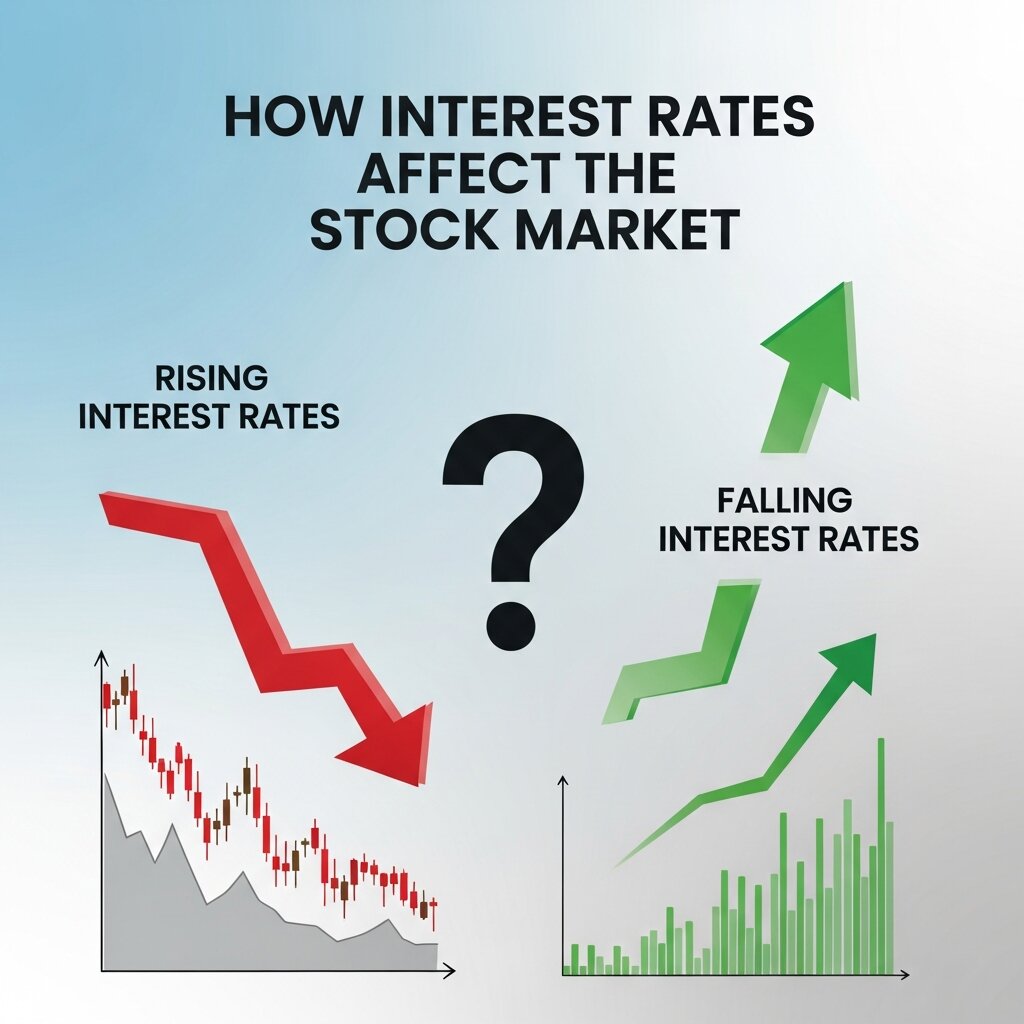
Borrowing costs for companies: When rates rise, it becomes more expensive for companies to borrow. Higher costs can squeeze profits, which often weighs on stock prices. When rates fall, borrowing gets cheaper, profits can grow, and stocks may climb.
The appeal of alternatives: When interest rates are high, safer investments like bonds and savings accounts offer better returns. This makes them more attractive compared to riskier stocks. As a result, some investors shift money out of the stock market and into these safer options, putting downward pressure on stock prices.
Consumer spending: Rates also affect how much consumers spend. Lower rates put more money in people’s pockets, boosting spending on goods and services. This can lift company revenues and, in turn, their stock prices.
Because of these dynamics, markets often react quickly to news about interest rate changes—or even hints about future changes. A single comment from a central bank official can move markets in minutes.
What This Means for Your Investment Strategy
Understanding how interest rates work isn’t just academic. It can directly shape how you manage your money and your portfolio.
Aligning Investments With Your Risk Tolerance
Your risk tolerance—how much volatility you can comfortably handle—should guide your investment choices. Interest rate movements can affect different assets in very different ways, so knowing your comfort level is essential.
When rates are low, riskier assets like stocks may offer the best potential for growth. When rates climb, more conservative options like bonds may become appealing, especially for those who prefer stability over big swings.
If market ups and downs keep you awake at night, you likely have a lower risk tolerance. In that case, a more balanced mix of investments may suit you better, regardless of where rates stand.
Practicing Smart Investment Risk Management
Good investment risk management means preparing for a range of outcomes rather than betting everything on one scenario. Interest rates are unpredictable, so building flexibility into your strategy is wise.
A few practical principles can help:
- Diversify across asset types: Spreading your money across stocks, bonds, and other assets can cushion the blow when one category struggles due to rate changes.
- Keep a time horizon in mind: Short-term rate moves matter less if you’re investing for decades. Long-term investors can often ride out the bumps.
- Stay informed, not reactive: Knowing why rates are changing helps you make calm, deliberate decisions instead of panicking at every headline.
Adjusting as Conditions Change
Markets and economies shift constantly. A strategy that works in a low-rate environment may need tweaking when rates rise. Reviewing your portfolio periodically—and rebalancing when needed—helps keep your investments aligned with both current conditions and your personal goals.
The key is to avoid knee-jerk reactions. Interest rate changes are a normal part of economic cycles. Investors who understand this tend to make better decisions than those who chase every swing in the market.
The Bigger Economic Picture
 Interest rates don’t operate in isolation. They interact with countless other factors—government spending, global trade, consumer confidence, and technological change, to name a few. A rate cut might fail to spark growth if confidence is low. A rate hike might not cool inflation if supply problems are driving up prices.
This complexity is exactly why economists debate the right course of action so fiercely. There’s rarely a perfect answer. Central banks must weigh competing priorities and make judgment calls based on imperfect information.
For everyday investors and consumers, the takeaway is simpler. Interest rates are a powerful signal about where the economy may be heading. Paying attention to them—and understanding what they mean—can help you make better financial decisions over time.
Frequently Asked Questions
1. What are interest rates?
Interest rates are the cost of borrowing money or the return earned on savings. They are usually expressed as a percentage of the loan amount or deposit and play a major role in consumer spending, business investment, and overall economic activity.
2. How do interest rates affect economic growth?
Interest rates influence how much people and businesses borrow and spend. Lower interest rates encourage borrowing and investment, which can stimulate economic growth. Higher interest rates make borrowing more expensive, slowing spending and helping control inflation.
3. Why do central banks raise or lower interest rates?
Central banks adjust interest rates to manage inflation and support economic stability. They raise rates when inflation is too high and lower rates when economic growth slows or unemployment rises to encourage borrowing and spending.
4. How do rising interest rates affect consumers?
Rising interest rates increase the cost of mortgages, credit cards, car loans, and personal loans. Consumers may spend less as borrowing becomes more expensive, which can affect household budgets and overall economic activity.
5. What is the relationship between interest rates and inflation?
Interest rates and inflation are closely connected. Higher interest rates reduce spending and borrowing, helping slow inflation. Lower interest rates encourage economic activity, but if spending grows too quickly, inflation can rise.
6. How do interest rates affect the stock market?
Interest rates influence company profits, investor behavior, and consumer spending. Lower rates often support stock market growth by making borrowing cheaper, while higher rates can put pressure on stock prices by increasing costs and making safer investments more attractive.
7. What is risk tolerance in investing?
Risk tolerance is the amount of market volatility and potential loss an investor is willing to accept. Understanding your risk tolerance helps you choose investments that match your financial goals and comfort level, especially during changing interest rate environments.
8. Why is investment risk management important when interest rates change?
Investment risk management helps protect your portfolio from unexpected market movements. Diversification, regular portfolio reviews, and maintaining a long-term perspective can reduce the impact of interest rate fluctuations on your investments.
9. Are low interest rates always good for the economy?
Not always. While low interest rates can stimulate growth and encourage investment, keeping rates too low for too long may contribute to inflation, excessive borrowing, or asset bubbles. Central banks aim to balance growth with long-term economic stability.
10. How can individuals prepare for changing interest rates?
Individuals can prepare by monitoring economic trends, managing debt wisely, maintaining diversified investments, and aligning financial decisions with their long-term goals and risk tolerance. Staying informed helps you adapt confidently to changing economic conditions.
Putting Knowledge Into Action
The relationship between interest rates and economic growth is one of the most important dynamics in modern finance. Low rates tend to fuel growth by making borrowing cheap, while high rates cool the economy by making it more expensive. Central banks walk a tightrope, adjusting rates to balance inflation against employment and growth.
For your own finances, the lessons are clear. Pay attention to interest rate trends, since they influence everything from mortgage costs to stock market performance. Match your investments to your risk tolerance, and lean on sound investment risk management to weather changing conditions. Above all, stay informed rather than reactive.