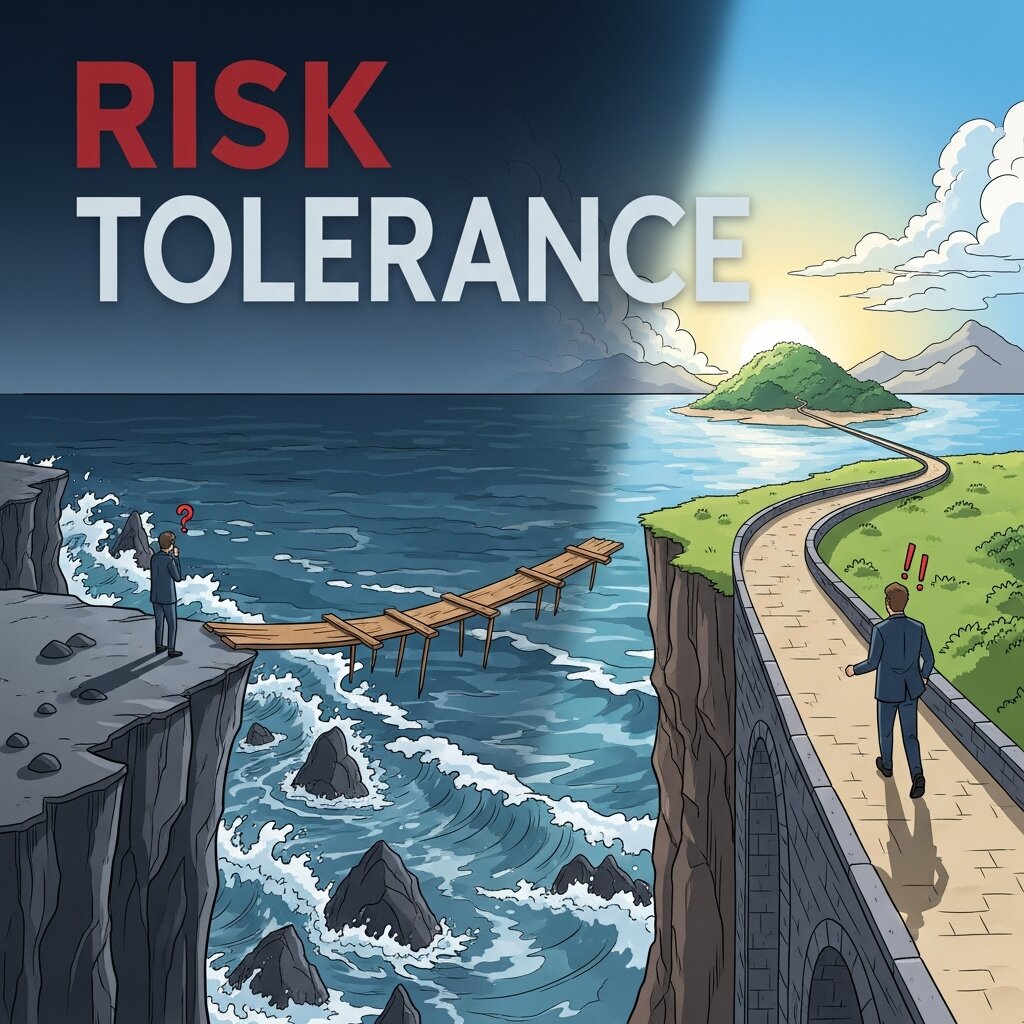
Many people jump into financial markets with their eyes fixed firmly on potential profits. They see friends making money, read news about soaring stock prices, and want to participate in the growth. However, focusing solely on the upside leaves out a critical half of the financial equation. Before putting your hard-earned money to work, you need to understand how much loss you can comfortably handle.
Determining your risk tolerance is the foundation of any successful financial plan. It acts as an emotional and financial anchor, keeping you steady when markets inevitably fluctuate. If you misjudge your comfort level, a sudden market drop might panic you into selling at the worst possible time. Conversely, if you play it too safe out of unnecessary fear, inflation might slowly erode your purchasing power over the decades.
Finding the right balance requires a deep and honest look at your financial situation, your long-term goals, and your psychological relationship with money. This guide will walk you through the essential steps to accurately assess your risk tolerance. By the end, you will have a clearer picture of how to build an investment strategy that lets you sleep peacefully at night while still working steadily toward your financial goals.
The true definition of risk tolerance
Risk tolerance is fundamentally about your psychological ability to endure swings in the value of your investments. It measures the degree of uncertainty you are willing to accept in exchange for potentially higher returns. Every investment carries some level of risk. Even holding cash under a mattress involves the risk of losing purchasing power due to inflation.
When you engage in stock market investing, you are buying tiny pieces of real businesses. The value of these businesses goes up and down based on economic conditions, consumer behavior, and global events. Your risk tolerance dictates how you react when the value of your portfolio temporarily drops by ten, twenty, or even thirty percent.
Some investors watch a market crash and view it as a buying opportunity. They have a high tolerance for risk. Others see a slight dip in their account balance and feel intense anxiety, losing sleep over their financial security. These individuals have a low tolerance for risk. Neither approach is inherently wrong, but matching your investment choices to your actual personality is vital for long-term success.
The three pillars of investment risk management
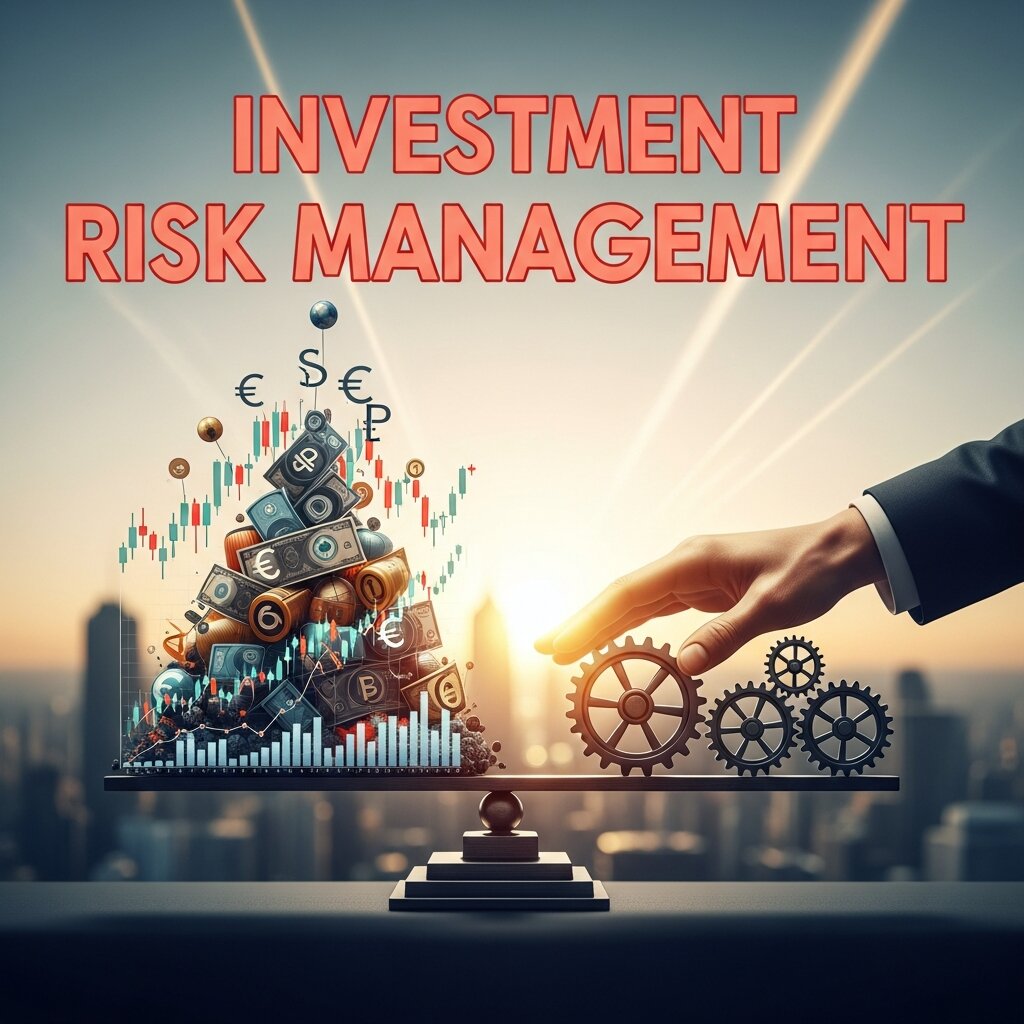 To build a solid financial foundation, you must separate your emotional feelings about risk from the mathematical reality of your finances. Proper investment risk management breaks down into three distinct categories. You need to evaluate all three to get an accurate picture of your overall risk profile.
Risk capacity: your financial reality
Risk capacity is a purely objective measurement. It looks at your financial ability to absorb a loss without altering your current lifestyle or derailing your future. This has nothing to do with your feelings. It is entirely about the numbers in your bank account, your income, and your financial obligations.
A young professional with a high salary, no dependents, and zero debt has a massive capacity for risk. If their stock portfolio drops by fifty percent, their daily life remains completely unchanged. They can still pay rent, buy groceries, and go on vacation. On the other hand, a retiree living off a fixed income with high medical bills has a very low risk capacity. Even a small drop in their portfolio could mean they struggle to pay for essential living expenses.
Risk requirement: your financial goals
Risk requirement focuses on the rate of return you need to achieve your specific financial goals. If you want to retire in ten years with two million dollars, and you currently have one hundred thousand dollars, you need a massive rate of return. You have a very high risk requirement because safe, low-yield investments will never get you to your target in time.
Conversely, if you already have enough money to cover your retirement and your only goal is to leave a small inheritance to your grandchildren, your risk requirement is very low. You do not need to chase high returns. You can comfortably put your money into stable, low-risk assets like government bonds. Understanding your requirement helps you avoid taking on unnecessary volatility if you have already essentially “won the game.”
Risk tolerance: your emotional boundary
This brings us back to risk tolerance, the subjective and emotional component. You might have a high financial capacity to take risks and a high requirement to reach your goals. However, if losing money causes you extreme distress, your risk tolerance is low.
When these three pillars conflict, you have to make difficult choices. If your required risk is much higher than your emotional tolerance, you must either find a way to save more money from your current income, push your retirement date further into the future, or accept that you will need to live on less money down the road. You cannot force yourself to be comfortable with extreme volatility if it is contrary to your nature.
Key factors that influence your comfort with risk
 Several personal and external factors shape your overall risk profile. Recognizing these elements will help you build a strategy that feels natural and sustainable over the coming decades.
Your investing time horizon
Your time horizon is simply the amount of time you have before you need to withdraw and spend your invested money. This is the single most critical factor in determining how aggressively you can invest.
Money that you need in the next three to five years should rarely be exposed to the stock market. If a recession hits right as you need to pay for a house down payment or a child’s college tuition, you might be forced to sell your investments at a massive loss. Short-term money belongs in high-yield savings accounts, certificates of deposit, or short-term treasury bills.
Money that you will not touch for twenty or thirty years can weather severe economic storms. The stock market has historically recovered from every single crash, recession, and depression given enough time. A long time horizon allows you to brush off temporary declines and capture the long-term upward trend of the global economy.
Income stability and career stage
The predictability of your paycheck plays a major role in your ability to take financial risks. A tenured university professor or a government employee usually enjoys high job security. Their steady, guaranteed income acts like a conservative bond in their overall financial life. Because their human capital is so stable, they can afford to take more risks with their investment capital.
A freelance graphic designer or an entrepreneur running a new startup faces a completely different reality. Their income might be wildly unpredictable, with great months followed by terrible ones. Because their professional life carries so much inherent volatility, they often need to invest their savings more conservatively. They need a larger financial cushion to smooth out the bumps in their variable income.
General investment authority and financial knowledge
Ignorance breeds fear, while education builds confidence. Your level of financial literacy directly impacts how you view market fluctuations. If you do not understand why stock prices move, every drop feels like a permanent disaster.
Investors who spend time learning about economic cycles, market history, and valuation metrics tend to exhibit higher risk tolerance. They understand that bear markets are a normal, healthy part of the economic cycle rather than a sign of the apocalypse. Furthermore, some individuals have a general investment authority within their household, meaning they are responsible for managing the family’s wealth. Carrying this responsibility can sometimes make people more conservative, as they feel the weight of protecting their family’s future.
Simple steps to measure your personal risk tolerance
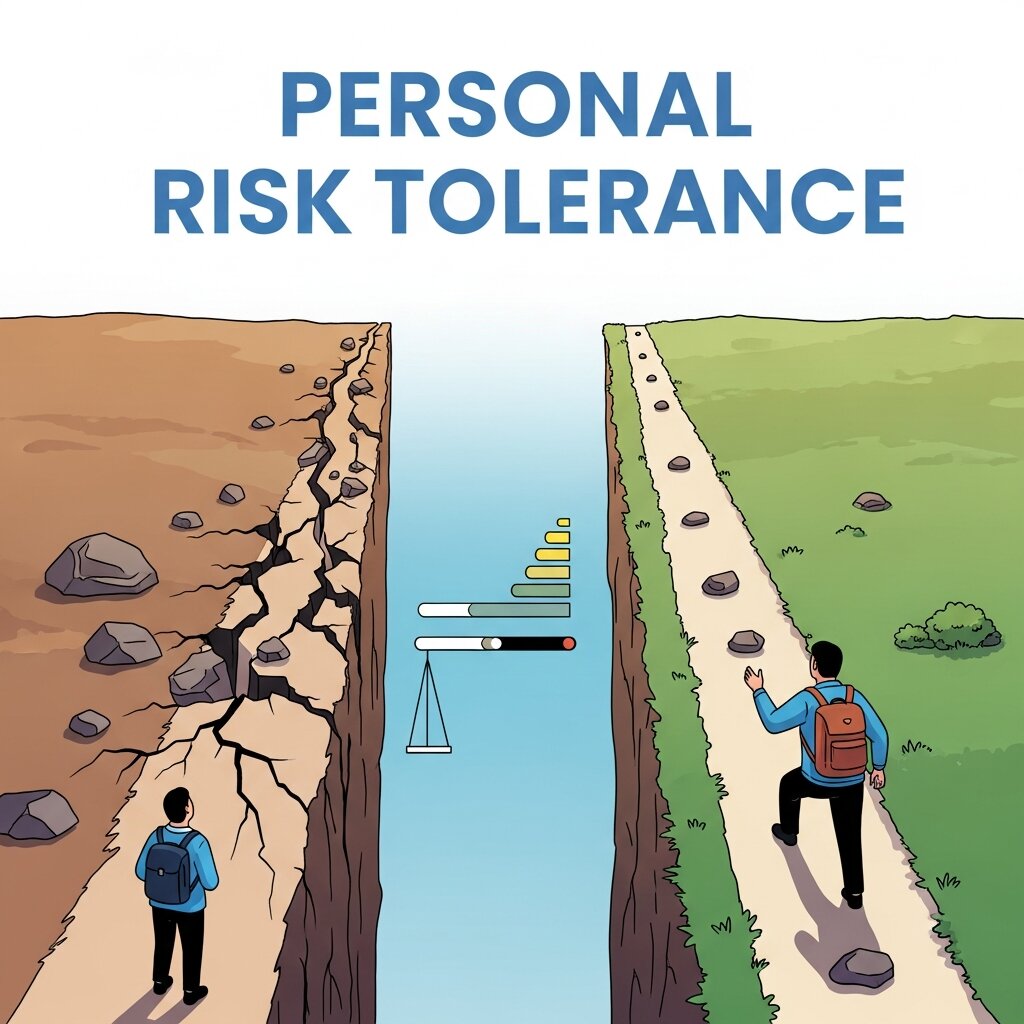 Figuring out your exact risk profile requires more than just guessing. You need to put yourself through a few mental exercises and evaluate your current financial safeguards to see where you truly stand.
Review historical stock market drops
Look at charts of major market crashes, such as the 2008 financial crisis or the sudden drop in early 2020. Put real dollar amounts to those percentages. If you invest one hundred thousand dollars, how would you feel if you logged into your account and saw it had dropped to sixty thousand dollars?
Would you immediately sell everything to stop the bleeding? Would you ignore it and wait for the recovery? Or would you try to scrape together extra cash to buy more shares at discounted prices? Be brutally honest with yourself. How you answer this hypothetical question is a strong indicator of your true emotional tolerance for volatility.
Take a standardized risk questionnaire
Many financial institutions and robo-advisors offer free risk assessment quizzes. These questionnaires typically ask you a series of multiple-choice questions about your age, your goals, and your reaction to various financial scenarios.
While not perfect, these quizzes provide a solid baseline. They force you to think about trade-offs. For example, a quiz might ask you to choose between a guaranteed three percent return or a fifty percent chance of a ten percent return combined with a fifty percent chance of a five percent loss. Your preference for certainty versus potential growth helps categorize you as a conservative, moderate, or aggressive investor.
Evaluate your emergency fund
Your cash reserves directly dictate your ability to be brave in the stock market. An emergency fund is a pool of liquid cash kept in a safe bank account, designated solely for unexpected expenses like medical bills, car repairs, or sudden job loss.
If you do not have an emergency fund, your risk tolerance should be zero. You cannot afford to lock your money up in volatile assets if you might need it next week to pay rent. A robust emergency fund containing three to six months of living expenses provides a massive psychological buffer. Knowing your immediate needs are fully covered allows you to let your long-term investments ride out the market’s natural turbulence.
Aligning your portfolio with your comfort level
Once you have assessed your capacity, requirement, and emotional tolerance, you must build a portfolio that reflects those realities. This usually involves adjusting the ratio of stocks to bonds in your account.
An aggressive portfolio might consist of ninety or one hundred percent stocks. This strategy offers the highest potential for long-term growth but comes with wild price swings. It requires a stomach of steel and a very long time horizon.
A moderate portfolio often aims for a balance, such as sixty percent stocks and forty percent bonds. The bonds act as a shock absorber during economic downturns, providing steady interest payments and preserving capital while the stock portion drives growth.
A conservative portfolio leans heavily on bonds and cash equivalents, perhaps holding only twenty or thirty percent in stocks. This protects the investor’s principal balance from significant drops but severely limits the potential for compound growth.
FAQ Section (Risk Tolerance & Investing)
1. What is risk tolerance in investing?
Risk tolerance is your emotional and psychological ability to handle fluctuations in investment value, including temporary losses, while still staying committed to your long-term financial strategy.
2. Why is risk tolerance important?
It helps prevent emotional decisions like panic selling during market downturns. Matching investments to your comfort level increases the chances of staying consistent and achieving long-term financial goals.
3. How is risk tolerance different from risk capacity?
Risk tolerance is emotional comfort with losses, while risk capacity is your financial ability to absorb losses without affecting your lifestyle or essential expenses.
4. Can risk tolerance change over time?
Yes. It often changes with age, income stability, financial responsibilities, and life events like marriage, having children, or changing careers.
5. What happens if I invest beyond my risk tolerance?
You may panic during market drops and sell investments at a loss, which can seriously harm long-term returns and financial progress.
6. How do I know my risk tolerance level?
You can evaluate it through market scenario questions, risk questionnaires, reviewing past reactions to losses, and assessing how you feel about potential portfolio drops.
7. Is high risk tolerance always better?
No. Higher risk tolerance can lead to higher returns but also greater stress and volatility. The “best” level depends on your personal goals and emotional comfort.
8. What role does time horizon play in risk tolerance?
A longer time horizon generally allows higher risk because you have more time to recover from market downturns, while short-term goals require safer investments.
9. Should I adjust my portfolio based on risk tolerance?
Yes. Your asset allocation—such as stocks, bonds, and cash—should reflect your risk tolerance to ensure you can stay invested during market fluctuations.
10. How often should I reassess my risk tolerance?
It’s best to reassess every few years or after major life changes like job shifts, income changes, or family responsibilities to keep your strategy aligned with your situation.
Building a resilient financial future
Investing is a lifelong journey, not a short sprint. The strategy you choose today must be one you can stick with through multiple economic cycles, political shifts, and personal life changes. By taking the time to accurately measure your risk tolerance, you protect yourself from making emotionally driven mistakes that can ruin years of careful saving.
Revisit your risk profile every few years, or whenever you experience a major life event like marriage, the birth of a child, or a career change. Your relationship with risk will naturally evolve as you age and your financial resources grow. Stay honest with yourself, maintain a solid emergency cushion, and build a portfolio that lets you enjoy the present while securing your future.