General Motors is spending big—and it’s betting on a future that looks nothing like its past. With billions flowing into electric vehicle batteries, artificial intelligence, and sustainable transportation, General Motors investments have become one of the more compelling stories in the stock market investing landscape. For investors trying to understand what the company is building toward, the picture is both ambitious and complex.
This post breaks down where General Motors is directing its capital, why these bets matter, and what they signal for anyone tracking the company from an investment risk management perspective.
Why General Motors Is Pivoting So Aggressively Right Now
The automotive industry is in the middle of one of its most significant transformations in over a century. Regulatory pressure, consumer demand, and intensifying competition from EV-native companies like Tesla and Rivian have pushed legacy automakers to rethink their entire business models. General Motors responded by announcing plans to invest $35 billion in electric and autonomous vehicle development through 2025—a figure that underscored just how seriously the company is treating this shift.
That’s not simply a number to impress shareholders. It reflects a structural decision to move away from the internal combustion engine as a long-term profit center and toward a new portfolio of revenue streams. The question for investors is whether that capital is being deployed wisely—and whether the returns will justify the risk.
General Motors’ EV Battery Strategy: The Ultium Platform
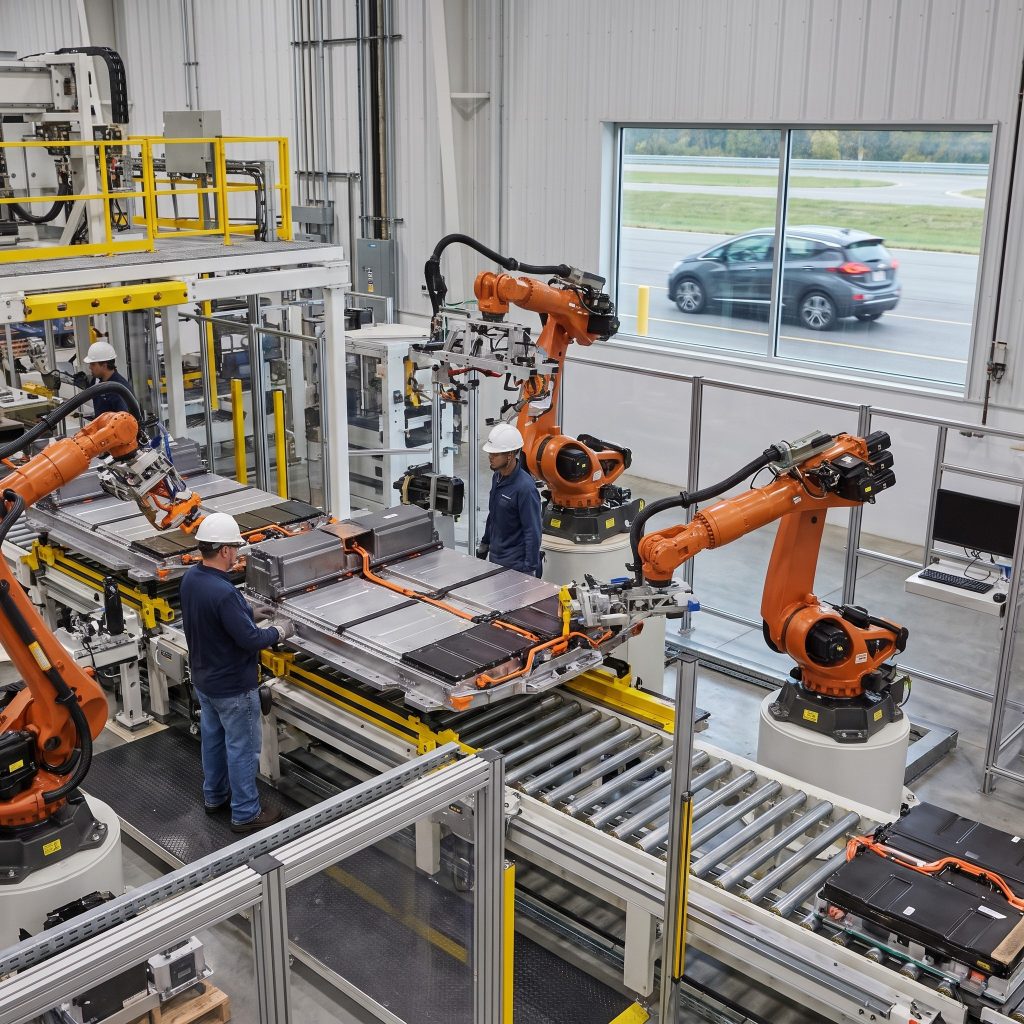 At the center of General Motors investments in electrification is Ultium, the company’s proprietary battery technology platform developed in partnership with LG Energy Solution. Rather than relying entirely on third-party suppliers, General Motors chose to co-develop its own battery cells—a decision with significant implications for cost control and supply chain resilience.
Ultium Cells LLC, the joint venture born from this partnership, has established battery manufacturing facilities in Ohio, Tennessee, and Michigan. The goal is to localize production and reduce dependence on overseas supply chains, which became a glaring vulnerability during the pandemic-era disruptions that hit the auto industry hard.
The Ultium platform is designed to be modular, meaning it can power a wide range of vehicles—from compact crossovers to commercial trucks. This flexibility is crucial. Rather than developing separate battery systems for different vehicle types, General Motors can scale a single architecture across its entire EV lineup, including the Chevy Silverado EV, the GMC Hummer EV, and the Cadillac Lyriq.
From an investment risk management standpoint, vertical integration in battery production is a double-edged strategy. It reduces exposure to supplier price fluctuations but increases capital expenditure and execution risk. If Ultium performs as intended, General Motors could achieve meaningful cost advantages over rivals that remain dependent on external battery suppliers.
How Artificial Intelligence Is Reshaping General Motors’ Operations
General Motors investments extend well beyond hardware. The company has made artificial intelligence a core component of its operational and product strategy, recognizing that the vehicles of the future will be defined as much by software as by engineering.
Cruise: General Motors’ Autonomous Vehicle Subsidiary
The most visible expression of General Motors’ AI ambitions is Cruise, its autonomous vehicle subsidiary. General Motors acquired Cruise in 2016 and has since poured billions into developing a fully driverless ride-hailing service. Cruise launched a commercial robotaxi service in San Francisco, making it one of the first companies in the world to offer paid, fully autonomous rides without a safety driver.
The path has not been without turbulence. Cruise faced operational setbacks and regulatory scrutiny in 2023, prompting General Motors to pause certain Cruise operations and restructure the division. The company has since refocused Cruise’s strategy, scaling back its timeline and concentrating on building a more reliable foundation before expanding further.
Despite the setbacks, General Motors has not retreated from autonomous vehicles. The long-term opportunity—autonomous freight, robotaxis, and fleet mobility services—remains enormous, and General Motors is still better positioned than most legacy automakers to capitalize on it.
AI in Manufacturing and Supply Chain
 Beyond Cruise, General Motors is integrating AI into its manufacturing processes and supply chain operations. Predictive maintenance systems powered by machine learning allow plants to anticipate equipment failures before they cause costly downtime. AI-driven demand forecasting helps align production more accurately with real-time market conditions—a lesson painfully learned during the chip shortage years.
These investments may not generate headlines, but they contribute meaningfully to operating efficiency. For investors focused on stock market investing fundamentals, operational improvements like these translate directly into margin performance over time.
General Motors and Sustainable Mobility: Beyond the Vehicle
Sustainable mobility, as General Motors defines it, goes beyond simply selling electric cars. The company has articulated a broader vision that includes reducing its own manufacturing emissions, investing in renewable energy for its facilities, and exploring new mobility business models.
General Motors’ Carbon Neutrality Commitments
General Motors has committed to carbon neutrality in its global products and operations by 2040. As part of that roadmap, the company has set interim targets to source 100% renewable energy for its U.S. operations by 2025 and globally by 2035. These commitments are not purely aspirational—they carry reputational and regulatory consequences if missed, and they increasingly influence institutional investor sentiment.
ESG considerations have become a legitimate variable in stock market investing decisions. Large institutional funds now screen for climate-related commitments and progress, meaning General Motors’ sustainability trajectory can affect its access to capital and its valuation multiples.
Energy and Charging Infrastructure Investments
General Motors has also made moves into EV charging infrastructure. The company joined forces with other automakers to form a joint venture to build a high-speed charging network across North America—a direct challenge to Tesla’s Supercharger dominance. Access to reliable charging is one of the most significant barriers to EV adoption, and General Motors’ willingness to invest in shared infrastructure signals a recognition that its vehicle sales depend on solving this ecosystem problem.
Additionally, General Motors has explored vehicle-to-grid (V2G) technology, which would allow EVs to feed energy back into the electrical grid during peak demand. If scaled, this capability could position General Motors vehicles as energy assets—not just transportation tools—opening entirely new revenue possibilities.
What General Motors Investments Mean for Investors
Understanding the direction of General Motors investments is one thing. Translating that understanding into a sound investing approach is another. A few key considerations are worth examining carefully.
How Should Investors Assess the Risk Profile of General Motors?
General Motors carries a risk profile shaped by both legacy automotive exposure and high-stakes technology bets. On one side, the company still generates substantial cash flow from its North American truck and SUV business—particularly the Silverado and Sierra franchises, which remain among the most profitable vehicles in the market. This cash flow funds the EV transition and provides a financial cushion that pure-play EV companies don’t have.
On the other side, the transition costs are real and ongoing. Investment risk management for anyone holding or considering General Motors stock requires a clear-eyed view of execution risk. Can the company ramp Ultium production on schedule? Will Cruise recover its momentum and reach commercial viability? Can General Motors compete on software and user experience with companies that were built as technology businesses from day one?
These are not rhetorical questions. They are the variables that will determine whether General Motors emerges from this transition as a stronger company—or whether it finds itself outpaced by more agile competitors.
Risk Tolerance and General Motors Stock
General Motors tends to attract investors with a moderate to higher risk tolerance who believe in the company’s ability to leverage its manufacturing scale and brand equity through a difficult transformation. The stock has historically traded at a discount to pure-play EV companies, which reflects market skepticism about legacy automaker transitions. That discount can represent an opportunity—but only if the transformation executes as planned.
For more conservative investors, the ongoing uncertainty around Cruise, the capital intensity of the EV build-out, and the macroeconomic sensitivity of auto sales may outweigh the potential upside. Risk tolerance is always personal, and General Motors sits in a part of the market where the gap between optimistic and pessimistic scenarios remains wide.
General Motors’ Strategic Partnerships and Joint Ventures
General Motors recognizes that the future of mobility cannot be built alone. Instead of relying solely on internal development, the company has formed strategic partnerships to accelerate innovation, reduce development costs, and strengthen its competitive position. One of the most significant collaborations is with LG Energy Solution through Ultium Cells LLC, which supports large-scale battery production for GM’s expanding electric vehicle lineup. The company has also partnered with technology firms, charging infrastructure providers, and software developers to improve connected vehicle services and enhance the EV ownership experience.
These partnerships allow General Motors to share research costs, access specialized expertise, and shorten the time required to bring new technologies to market. For investors, successful collaborations reduce operational risks while creating additional opportunities for long-term growth. Monitoring future partnerships can provide valuable insight into how GM plans to remain competitive in the rapidly evolving automotive industry.
Financial Outlook and Future Growth Opportunities
 The success of General Motors’ long-term investment strategy will ultimately depend on its ability to convert innovation into sustainable financial performance. While significant capital expenditures are expected to continue as the company expands EV production and AI capabilities, these investments are intended to generate stronger revenue streams over the coming decade. Growth opportunities extend beyond vehicle sales into software subscriptions, connected services, autonomous driving technologies, fleet management, energy solutions, and recurring digital services.
Investors should closely monitor key financial indicators such as EV sales growth, operating margins, research and development spending, free cash flow, and profitability across GM’s electric vehicle portfolio. Improvements in battery production efficiency, increased software revenue, and expanding charging infrastructure could significantly strengthen the company’s long-term valuation. If General Motors successfully executes its transformation strategy, it has the potential to evolve from a traditional automaker into a diversified mobility and technology company with multiple sources of recurring revenue.
Frequently Asked Questions (FAQs)
1. What are General Motors’ biggest investment areas?
General Motors is primarily investing in electric vehicles (EVs), Ultium battery technology, artificial intelligence (AI), autonomous driving, EV charging infrastructure, advanced manufacturing, and sustainable mobility initiatives to support its long-term growth strategy.
2. Why is General Motors investing heavily in electric vehicles?
GM is investing in EVs to meet growing consumer demand, comply with global emissions regulations, reduce reliance on internal combustion engines, and strengthen its position in the rapidly expanding electric vehicle market.
3. What is the Ultium battery platform?
Ultium is General Motors’ modular battery platform developed to power a wide range of electric vehicles. It is designed to improve battery performance, lower production costs, increase driving range, and support scalable EV manufacturing.
4. How is General Motors using artificial intelligence?
General Motors uses AI in autonomous driving through Cruise, predictive maintenance, smart manufacturing, supply chain optimization, quality control, and connected vehicle technologies to improve efficiency and innovation.
5. What is Cruise, and why is it important to General Motors?
Cruise is General Motors’ autonomous vehicle subsidiary focused on developing self-driving technology and robotaxi services. It represents GM’s long-term investment in future mobility and AI-powered transportation solutions.
6. How do General Motors’ sustainability investments benefit the company?
GM’s sustainability investments help reduce carbon emissions, improve operational efficiency, strengthen its ESG profile, attract environmentally conscious investors, and support compliance with future environmental regulations.
7. Is General Motors considered a good long-term investment?
General Motors may appeal to long-term investors who believe in the company’s EV transition, AI development, and manufacturing expertise. However, investment decisions should consider market conditions, financial performance, and individual risk tolerance.
8. What risks should investors consider before investing in General Motors?
Key risks include intense competition in the EV market, high capital expenditures, supply chain disruptions, economic slowdowns, regulatory changes, technology execution challenges, and uncertainty surrounding autonomous vehicle commercialization.
9. How does General Motors compare with other EV manufacturers?
Unlike pure EV companies, General Motors combines established automotive manufacturing, strong cash flow from traditional vehicles, and significant investments in EVs, battery technology, and autonomous driving to support its long-term transformation.
10. What should investors monitor regarding General Motors’ future growth?
Investors should monitor EV sales growth, Ultium battery production, AI and Cruise developments, charging infrastructure expansion, financial performance, profitability, sustainability progress, and overall execution of the company’s long-term investment strategy.
Reading General Motors’ Investment Roadmap as a Signal
The scale and composition of General Motors investments tell a story about where the company believes value will be created over the next decade. Battery technology, artificial intelligence, sustainable mobility, and charging infrastructure are not peripheral initiatives—they are the architecture of the business General Motors is trying to become.
For investors tracking the company, the most useful exercise is not simply asking whether General Motors’ current investments are impressive. The more relevant question is whether they are sufficient—sufficient to compete with Tesla’s software ecosystem, sufficient to meet regulatory mandates in key markets like California and the European Union, and sufficient to generate returns that justify the capital being deployed.