Few forces shape a business’s trajectory more decisively than the broader economic environment. Companies that track economic trends closely gain a structural advantage—identifying growth opportunities, managing risk, and making smarter investment decisions before the competition does.
This post breaks down the most consequential economic trends of 2026 and explains what they mean for businesses pursuing sustainable, long-term growth. Whether you’re refining your investment risk management strategy or reassessing your exposure in stock market investing, understanding the macro forces at play is the first step toward building a resilient enterprise.
Why Economic Trends Matter for Business Strategy
 Economic trends are not just abstract data points reserved for economists and central bankers. They shape consumer confidence, borrowing costs, hiring decisions, and competitive dynamics across every industry.
Businesses that treat macroeconomic analysis as a peripheral concern tend to be caught off guard by market shifts. Those that embed economic intelligence into their strategic planning cycles, however, are better positioned to allocate capital effectively, manage downside risk, and capture emerging opportunities ahead of their peers.
The challenge is knowing which trends deserve attention—and which are just noise.
The Tightening of Global Credit Conditions
Central banks across North America, Europe, and parts of Asia have maintained elevated interest rates in response to persistent inflationary pressures. For businesses, this means the cost of capital remains high. Debt financing is more expensive, refinancing legacy obligations is more complex, and consumer spending on credit-dependent goods—like big-ticket durables and residential property—remains subdued.
For growth-oriented businesses, this environment demands a sharper focus on investment risk management. Capital allocation decisions made during low-interest periods need revisiting. Projects that made sense at a 3% cost of capital may not hold up at 6% or higher. CFOs and strategic leadership teams are increasingly stress-testing their portfolios against prolonged high-rate scenarios rather than assuming a quick pivot back to cheap money.
This shift has also influenced stock market investing behavior. Investors have rotated toward value stocks, dividend-paying equities, and defensive sectors, while high-multiple growth stocks have faced valuation compression. Businesses with strong free cash flow profiles and predictable earnings are commanding a premium. For founders and executives thinking about capital structure, this trend signals that profitability—not just growth—is what markets are currently rewarding.
Deglobalization and the Reshoring of Supply Chains
The global supply chain disruptions of the early 2020s accelerated a structural rethinking of how companies source inputs and manufacture products. What began as a crisis response has hardened into deliberate policy—across the United States, the European Union, and several Asian economies, governments are incentivizing domestic production through subsidies, tariffs, and regulatory frameworks.
For businesses, this deglobalization trend cuts both ways. On the one hand, reshoring reduces exposure to geopolitical disruption and improves supply chain visibility. On the other hand, it typically increases unit costs, at least in the short to medium term. Companies navigating this shift successfully are those that take a portfolio approach—maintaining strategic supplier relationships abroad while building regional redundancy closer to their core markets.
Sustainability intersects meaningfully here. Shorter supply chains often carry lower carbon footprints. For businesses committed to environmental, social, and governance (ESG) targets, reshoring initiatives can double as sustainability investments—reducing scope 3 emissions while improving operational resilience.
The Productivity Dividend from AI and Automation
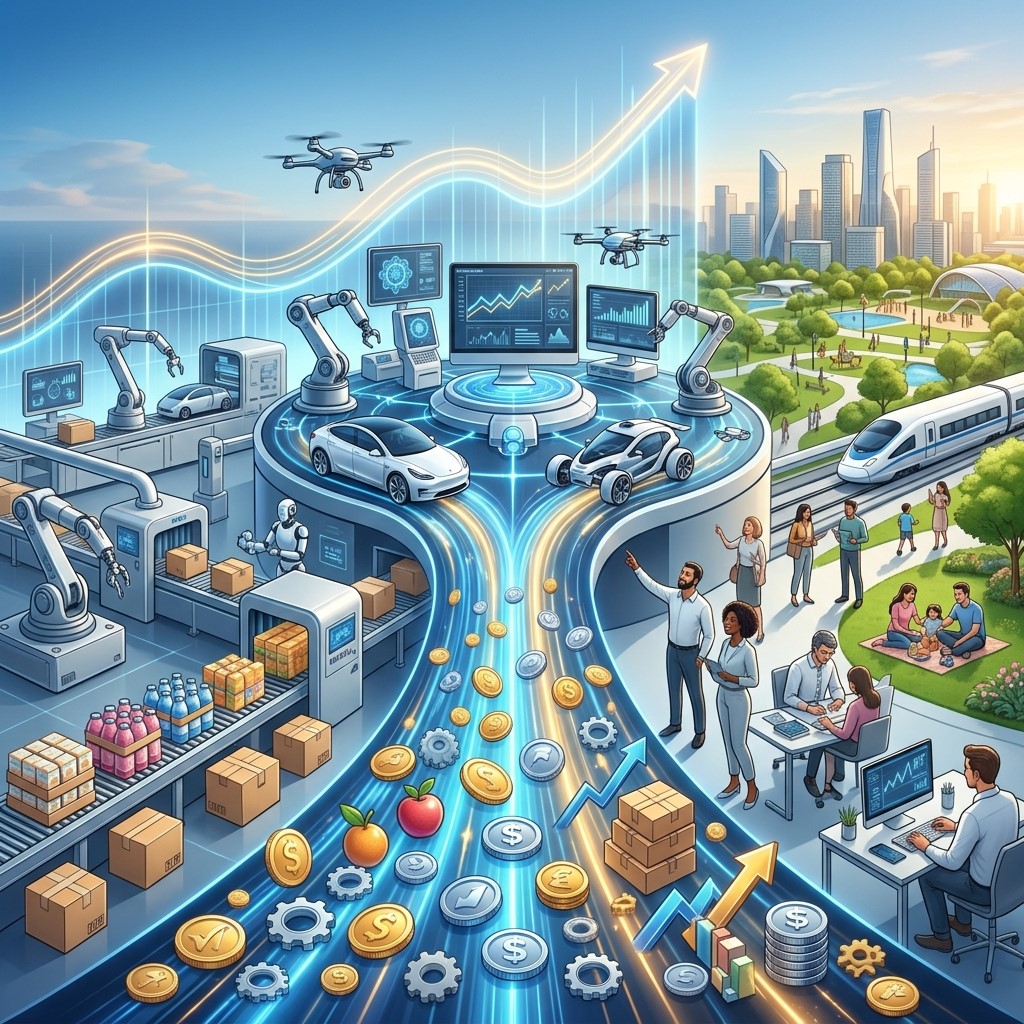 Artificial intelligence is no longer a future-state consideration for most industries—it is actively reshaping cost structures, workforce composition, and competitive positioning now. Businesses deploying AI across functions like customer service, financial modeling, logistics optimization, and content production are reporting meaningful efficiency gains.
From a macroeconomic standpoint, the general investment authority behind AI adoption is compelling. Productivity gains historically translate into broader economic growth, increased corporate earnings, and expanded valuations in high-exposure sectors. This dynamic has been a central driver of equity market performance in the technology sector over recent years.
For non-technology businesses, the key question is no longer whether to adopt AI, but how fast and in which functions. Companies that move too slowly risk cost disadvantages against competitors who automate earlier. The businesses finding the right balance are those that pair technology deployment with thoughtful change management—ensuring that efficiency gains are captured without disrupting the human capabilities that drive customer relationships and innovation.
Demographic Shifts and the Labor Market Transformation
Population aging in developed economies is tightening labor markets in ways that are structural rather than cyclical. The workforce participation rates in countries like Japan, Germany, and the United States reflect a long-term demographic reality: fewer working-age adults are entering the labor pool to replace those retiring.
For businesses, this creates persistent wage pressure, elevated competition for skilled talent, and an increased premium on employee retention. Companies investing in workforce development, flexible working arrangements, and competitive compensation packages are seeing measurable benefits in both productivity and attrition metrics.
The demographic economic trend also shapes consumption patterns. As older populations grow as a share of total consumers, industries catering to healthcare, financial planning, senior living, and experience-based services are seeing sustained demand tailwinds. Growth-oriented businesses would do well to map their product and service offerings against these demographic realities.
The Green Economy Transition and Its Business Implications
The transition to a lower-carbon economy is generating one of the most significant realignments of capital since the industrial revolution. Regulatory frameworks—including the EU’s Corporate Sustainability Reporting Directive (CSRD) and the SEC’s proposed climate disclosure rules in the United States—are raising the compliance burden for businesses of all sizes. At the same time, consumer and investor expectations around sustainability performance have never been higher.
For businesses, this means the green transition is simultaneously a risk and an opportunity. Companies in carbon-intensive industries face rising regulatory costs and potential stranded asset risk. Those developing clean technologies, sustainable materials, and energy-efficient solutions are attracting both customer demand and investor capital.
The intersection of the green economy transition and stock market investing is increasingly apparent. ESG-aligned funds have grown substantially, and institutional investors representing trillions in assets under management now routinely evaluate climate-related financial disclosures as part of their investment risk management frameworks. Businesses that build credible sustainability narratives—backed by measurable progress, not just commitments—will be better positioned in capital markets over the medium term.
Geopolitical Fragmentation and Market Volatility
Economic trends do not exist in a vacuum. Geopolitical tensions—including ongoing conflicts, trade disputes, and the fracturing of post-Cold War multilateral institutions—are introducing new layers of market volatility and uncertainty for businesses operating across borders.
This fragmentation is reshaping the economic geography of global commerce. New trade corridors are forming between non-Western economies. The US dollar’s role as the dominant global reserve currency faces long-term structural challenges, even if its short-term position remains secure. Commodity markets, particularly energy and critical minerals, are increasingly sensitive to political developments in a handful of supply-concentrated regions.
For businesses with international operations or global supply chains, proactive geopolitical risk management is now an essential component of investment risk management. Scenario planning, political risk insurance, and geographic diversification of revenues and suppliers are strategies gaining traction among businesses that have learned, sometimes painfully, that political risk can materialize with speed and severity.
Digital Commerce and the Shift in Consumer Behavior
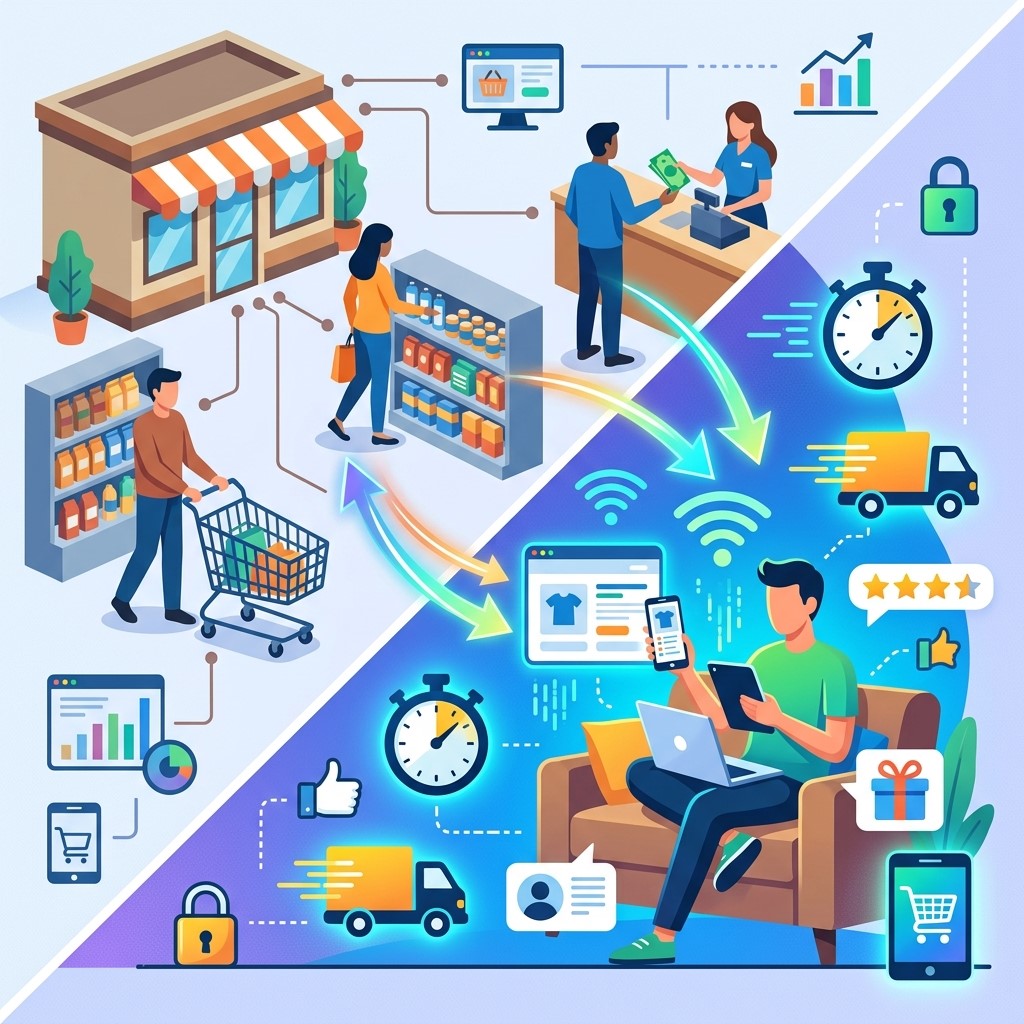 The structural shift toward digital commerce continues to reshape retail, financial services, media, and healthcare. Consumers have elevated their expectations for speed, personalization, and seamless digital experiences. Businesses that lag in digital capability face growing revenue leakage to more nimble competitors—including direct-to-consumer brands, digital-native platforms, and marketplace aggregators.
This economic trend carries direct implications for capital deployment. Businesses investing in digital infrastructure, data analytics, and customer experience technology are building durable competitive advantages. Those treating digital transformation as a cost-efficiency exercise—rather than a growth engine—are missing a substantial share of the opportunity.
For investors monitoring stock market investing opportunities, sectors with high digital commerce exposure continue to offer compelling long-term growth narratives, even as near-term valuations remain sensitive to interest rate movements.
The Rise of Inflation Volatility and Pricing Power Strategies
Inflation is no longer behaving like a predictable macroeconomic variable—it has become structurally more volatile across global markets. Instead of steady, central-bank-controlled movements, businesses are now facing irregular inflation spikes driven by supply shocks, energy market instability, and shifting consumer demand patterns. This volatility makes pricing strategy a critical competitive lever rather than a routine financial adjustment. Companies with strong pricing power—those able to raise prices without losing customers—are increasingly outperforming peers with weaker brand equity or commoditized offerings. For businesses, this environment demands continuous monitoring of input costs, dynamic pricing models, and closer alignment between finance and marketing teams. Investment risk management now includes inflation scenario planning, ensuring that margin compression does not silently erode long-term profitability during unpredictable economic cycles.
Capital Reallocation Toward High-Resilience Industries
A major structural shift in global investment patterns is the ongoing reallocation of capital toward industries that demonstrate resilience during economic uncertainty. Sectors such as healthcare, renewable energy, cybersecurity, and essential consumer goods are attracting disproportionate investor attention compared to cyclical industries. This shift is driven by the growing preference for stability over speculative growth, especially in an environment shaped by high interest rates and geopolitical fragmentation. For businesses, this means access to capital is becoming more selective, with investors prioritizing predictable cash flows, strong governance, and low operational volatility. Companies positioned in high-resilience sectors are benefiting from lower financing costs and stronger valuation multiples. As a result, strategic positioning within these industries is becoming a key determinant of long-term competitiveness and survival in modern stock market investing environments.
The Acceleration of Data-Driven Decision Making in Business Operations
Data has evolved from a supporting tool into a core driver of strategic decision-making across modern enterprises. Businesses are increasingly relying on real-time analytics, predictive modeling, and AI-powered insights to guide everything from supply chain management to customer acquisition strategies. This shift is not merely technological—it represents a fundamental change in how organizations interpret uncertainty and opportunity. Instead of relying on historical reporting, companies now operate in a continuous feedback loop where decisions are constantly refined based on live performance data. This transformation enhances agility, reduces operational inefficiencies, and improves forecasting accuracy in volatile markets. However, it also requires significant investment in data infrastructure, talent, and governance frameworks. Organizations that fail to integrate data deeply into their decision-making processes risk falling behind more adaptive, insight-driven competitors in both efficiency and innovation.
FAQ: Economic Trends and Business Strategy
1. What are economic trends, and why do they matter for businesses?
Economic trends are large-scale shifts in areas like interest rates, inflation, labor markets, and global trade. They matter because they directly influence consumer behavior, business costs, investment decisions, and overall market conditions.
2. How do high interest rates affect business growth?
High interest rates increase the cost of borrowing, making loans and expansion more expensive. Businesses often respond by slowing down investments, improving efficiency, and prioritizing profitable projects over aggressive growth.
3. What is deglobalization, and how does it impact companies?
Deglobalization refers to the shift toward regional or domestic supply chains instead of global ones. It can increase costs but also reduces risks from geopolitical disruptions and supply chain breakdowns.
4. How is AI changing the modern economy?
AI and automation are improving productivity by reducing manual workloads, optimizing operations, and enabling faster decision-making. Companies adopting AI early often gain a strong competitive advantage.
5. Why is the labor market becoming more challenging for businesses?
Aging populations and slower workforce growth are creating talent shortages in many countries. This leads to higher wages, stronger competition for skilled workers, and increased focus on employee retention.
6. What is the green economy transition?
The green economy transition is the global shift toward environmentally sustainable business practices, including reduced carbon emissions, renewable energy adoption, and stricter environmental regulations.
7. How does geopolitics affect economic trends?
Geopolitical tensions can disrupt trade routes, increase market volatility, and reshape global supply chains. Businesses must plan for uncertainty using diversification and risk management strategies.
8. Why is digital commerce so important today?
Digital commerce is reshaping how consumers shop and interact with brands. Businesses that invest in digital platforms, data analytics, and seamless user experiences tend to outperform traditional competitors.
9. How can businesses prepare for economic uncertainty?
Businesses can prepare by diversifying supply chains, stress-testing financial models, investing in technology, and maintaining flexible capital structures to adapt quickly to changing conditions.
Building a Business That Lasts Through Economic Cycles
Sustainable business growth is not about predicting economic conditions with perfect accuracy. Markets are too complex, and forecasts are too uncertain, for any business to rely on precision timing. What distinguishes durable businesses from fragile ones is their capacity to adapt—and that capacity is built through deliberate strategic choices made before volatility strikes.
Tracking economic trends matters because it shortens reaction time. When a credit tightening cycle begins, businesses that have already stress-tested their capital structure are better prepared. When a supply chain disruption hits, companies that have diversified sourcing are more resilient. When consumer preferences shift, brands that stay close to behavioral data respond faster.